
Selling a hoarder house can feel like an impossible task when you’re surrounded by piles of stuff, possible code violations, and a shrinking pool of buyers who can actually close. Most folks assume they’ll need months of cleaning and thousands in repairs before they can even think about selling, but that’s not always the case.
The fastest way to sell a hoarder house? Usually, it’s to sell it as-is to a cash buyer who specializes in distressed properties. That route can close in 7-30 days, and you don’t have to lift a finger to clean.
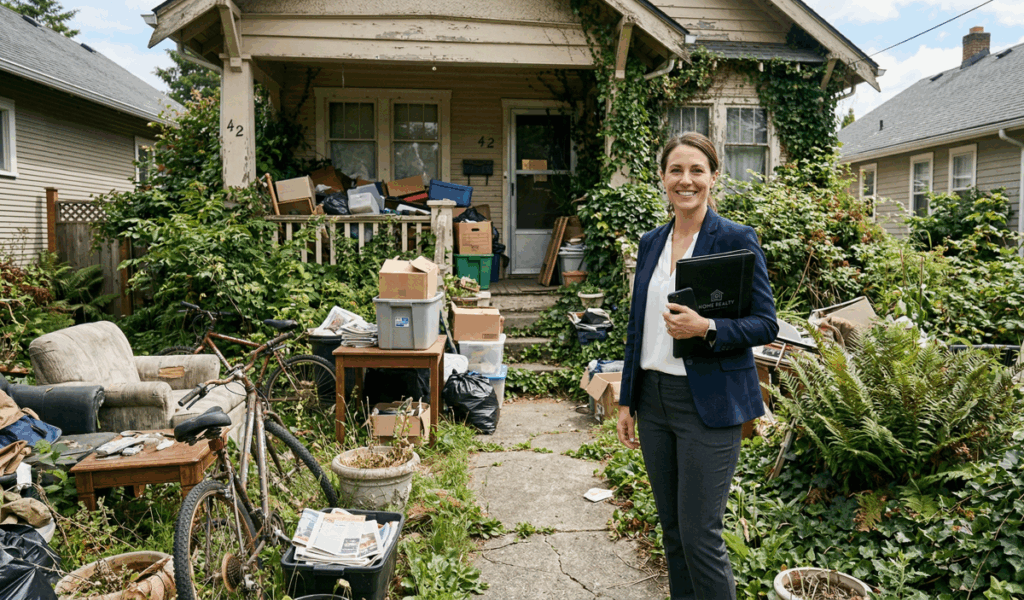
You’ve got options besides the traditional route. Selling a hoarder house usually comes down to three paths: clean everything and list it the usual way, sell as-is for cash, or do the bare minimum and hope for the best. Each one hits your timeline, costs, and profit differently.
This guide will help you figure out the legal stuff, when cleanup is actually worth it, and how to dodge mistakes that can eat up your proceeds. Maybe you inherited the place, live out of state, or just need to move on fast—either way, you can sell without fixing everything first.
Key Takeaways
- Hoarder houses sell faster as-is because traditional buyers can’t get financing for homes with safety or code issues
- Cleanup and repair costs often eat up any extra money you’d make from a higher sale price
- Cash buyers will buy hoarder homes just as they are and can close in as little as a week
Key Steps for How to Sell a Hoarder House

If you want to sell a hoarder house, you’ll need to get real about what’s inside, decide if speed or top dollar matters more, and pull together the right legal paperwork before you make a move.
Evaluating the Condition and Level of Hoarding
Start by walking through every room and jotting down what you see. Blocked exits, water damage, mold, pests, and broken plumbing or electrical—snap photos as you go.
The level of hoarding changes your options. Light hoarding might just mean clutter but you can still walk around. Moderate hoarding means blocked doors and rooms you can barely use. Severe hoarding? No clear paths, real safety hazards, and fire risks.
Look for biohazards like animal waste or spoiled food. Check for damage to floors, walls, or ceilings. Flip on the lights and faucets to see what’s working, if anything.
Knowing the true condition helps you figure out if cleanup is worth it or if selling as-is makes more sense. If you spot big structural problems or health hazards, you might want to call in a pro for an inspection—better safe than sorry.
Determining Your Main Goal: Speed vs. Price
Here’s where you have to pick: do you want to sell as fast as possible, or squeeze every last dollar out of the place? Each option comes with its own headaches.
If you need to move quickly, taking an as-is offer from a cash buyer or investor is the way to go. No cleanup, no repairs, no staging—just a quick close, usually in a couple of weeks. This is a lifesaver if you’re dealing with estate deadlines or can’t keep paying for the property.
Want to get the highest price? You’ll need to put in the work. That means cleaning out the house, fixing things, maybe even updating some finishes. Then you list it and wait for a traditional buyer. It can take months, but sometimes the bigger payday is worth it.
If you don’t have money for cleanup or can’t pay the bills while the house sits, selling to a cash buyer who deals with hoarder homes might be your best bet.
Preparing Essential Paperwork and Legal Documentation
Before you do anything, make sure you know who actually owns the property. If you’re an heir or executor, check that probate is finished and you’re cleared to sell.
Here’s the paperwork you’ll want to have handy:
- Property deed with current ownership info
- Title report showing any liens or issues
- Mortgage statements if there’s a loan
- Property tax records so you know what’s owed
- HOA documents if there’s an association
- Death certificate for inherited properties
Double-check your state’s disclosure laws. Most require you to come clean about known problems, including hoarding damage. If you’re not sure, a real estate attorney can help you avoid trouble.
Find out if there are any code violations. Some cities will flag hoarder homes for health or safety risks. You might need permits to clean up or get rid of certain stuff. Knowing this up front saves you headaches later.
Choosing Your Sales Strategy: As-Is Sale vs. Cleanup and Repairs

When you’re ready to sell, you’ve got to pick a lane. Do you unload the place as-is, or do you roll up your sleeves, clean, and repair before listing?
Pros and Cons of Selling As-Is
Selling as-is means you don’t touch a thing—no cleaning, no repairs, just list it in its current state. There are some real upsides to this approach.
Advantages of selling as-is:
- Speed: Close in a week or two with a cash buyer
- No cleanup costs: Skip the $2,000–$10,000+ for pro cleaning
- No repairs: Save yourself thousands in renovations
- Less stress: No wrangling with contractors or junk haulers
- Immediate relief: Perfect if you need to sell your house fast in Delaware
Disadvantages to consider:
- Lower price: Usually get 50–70% of the after-repair value
- Fewer buyers: Most buyers can’t or won’t take on a hoarder house
- Inspections: Buyers still check things out and might adjust their offer
Most companies that buy houses in Delaware prefer as-is sales—they’ll handle the mess after closing.
When Cleaning and Repairing Make Sense
Sometimes it’s worth cleaning up and fixing things, but only if you’ve got the resources. Your budget and timeline are the big factors here.
Consider this route if you have:
- Enough cash: $5,000–$25,000+ for cleanup and repairs
- Time to wait: 3–6 months for the whole process
- A hot market: High demand in your area makes the investment worth it
- Manageable mess: Light or moderate hoarding, not a total disaster
Do the math. If cleanup is $8,000 and repairs are $12,000, you need to get at least $20,000 more than any as-is offer just to break even.
Get quotes from pros before you commit. In the end, whether you fix or sell as-is depends on your goals and how bad the place really is.
Sometimes, after all is said and done, the higher sale price just doesn’t make up for the hassle and cost.
How Cash Buyers Simplify the Process
Cash buyers who buy houses in Delaware make the whole thing a lot less complicated. They’ll buy your place as-is, no questions asked.
Here’s how it usually goes:
- You reach out and describe the property
- They visit (sometimes the next day) and check it out
- You get a cash offer, often within 24 hours
- You pick your closing date
- You close and get paid—sometimes in just a week or two
Once you close, you’re done. The buyer brings in cleanup crews, manages repairs, and deals with anything you left behind. You don’t have to organize or supervise a thing.
They typically cover closing costs. No realtor commissions (that’s 5–6% saved), and you skip paying for repairs, inspections, or staging. All you really need to decide is if the offer works for you.
When realtors talk about selling as-is, they’ll tell you cash buyers are the fastest way out—especially helpful if you inherited the home or need to move in a hurry.
Top Options for Selling Fast and Stress-Free in Delaware
In Delaware, if you’re staring down a hoarder house, you’ve got three main ways to go: find a real estate investor who’ll buy as-is, work with a cash buying company, or shop around and compare offers to keep as much as possible after expenses.
Selling to Real Estate Investors and Cash Buyers
Real estate investors who know how to sell a hoarder house can close in as little as 7–14 days. They’ll take the house in any condition and clean up after closing. You don’t have to clear out clutter, fix anything, or even sweep the floors.
Cash buyers skip all the usual delays. No waiting on banks, no appraisals, no chance the buyer’s financing falls apart. That’s a huge deal for hoarder homes, since most lenders won’t touch them if there are safety or code issues.
Here’s what you get:
- No showings or open houses
- Leave whatever you want behind
- No worries about code violation fines
- Pick your closing date
- No repairs required
The catch is you’ll likely get a lower offer than on the open market. But by the time you subtract cleanup costs, holding expenses, and the risk of deals falling apart, your net profit might be pretty close either way.
Working With ‘We Buy Houses’ Companies in Wilmington Delaware
Companies advertising “we buy houses Wilmington Delaware” are all over New Castle County and nearby towns. These folks make direct cash offers and can close fast, often without you needing to clean or stage anything.
Legit cash buyers usually give you a written offer, and there’s no obligation to accept. Most cover closing costs and skip commissions entirely.
The process starts with a quick property assessment, sometimes in person, sometimes just from photos you send over.
What to expect:
- Submit basic property details
- Receive offer within 24-48 hours
- Review terms and timeline
- Choose your closing date
- Sign paperwork and receive payment
Reputable companies won’t pressure you or ask for any upfront fees. They get that selling a hoarder house is tough and usually handle things with a bit more sensitivity and privacy than you’d expect.
Comparing Offers for Maximum Net Proceeds
Getting a few offers—say, from 3-5 different cash home buyers in Delaware—gives you a much clearer sense of what your place is actually worth as-is. It’s worth the effort to compare terms side by side, not just the top-line number.
Look beyond the offer price. Who’s paying closing costs, title fees, transfer taxes? Some buyers dangle a high price but then sneak in extra deductions at closing.
Create a comparison chart:
| Company | Offer Price | Closing Costs | Your Net | Timeline | Fees |
|---|---|---|---|---|---|
| Buyer A | $XXX,XXX | Buyer pays | $XXX,XXX | 10 days | None |
| Buyer B | $XXX,XXX | Split | $XXX,XXX | 14 days | $X,XXX |
| Buyer C | $XXX,XXX | Seller pays | $XXX,XXX | 21 days | None |
Ask every buyer for a net sheet spelling out exactly what you’ll walk away with at closing. It’s the only way to avoid last-minute surprises and really know what you’re getting.
Legal Obligations, Disclosure, and Closing Successfully
Selling a hoarder house means you’ve got to deal with some legal stuff—property disclosures, code violations, especially if it’s an inherited place. State laws require certain disclosures, and if there are violations, you’ll need to address those too.
Required Disclosures for Hoarder Houses
You’ve got to disclose any known material defects to buyers before closing. Most states want you to fill out a seller’s disclosure form listing issues with the property’s condition.
For hoarder homes, that means being upfront about any structural damage from too much weight or moisture. If there’s evidence of pests, mold, or water damage because of the hoarding, you’ll need to mention that too.
Compromised electrical or plumbing systems? Those go on the disclosure as well.
Key disclosure items include:
- Structural damage to floors, walls, or ceilings
- Active or past pest infestations
- Mold or mildew issues
- Non-functioning utilities
- Fire hazards or code violations
You can sell “as-is” and still meet disclosure rules, but you need to be honest about what you know. Sellers have legal obligations that don’t just disappear because you’re selling as-is.
Handling Code Violations and Inherited Properties
If there are code violations, you’ll need to address them before selling. Reach out to your local building department to see what’s on the books and which violations have to be fixed before closing.
Some towns let you sell with open violations if the buyer signs off on them. Others require you to fix everything first. Your real estate attorney can help you figure out the local rules.
When it’s an inherited hoarder house, you need to prove you’ve got the right to sell. That means probate court approval or executor paperwork. Once that’s sorted, you can move forward.
If there are multiple heirs, everyone needs to sign off before you can sell. No shortcuts here.
Ensuring a Smooth and Legally Sound Sale
It’s smart to work with pros who get the challenges of hoarding. A neutral third party—like a closing attorney or escrow officer—handles the actual closing and makes sure all the paperwork and requirements are met.
Gather your documents before you list. You’ll want the deed, tax records, any HOA docs, plus receipts or inspection reports for repairs.
Essential closing documents include:
- Property deed and title
- Disclosure statements
- Purchase agreement
- Bill of sale for included items
- Closing statement with financial details
Closing usually takes 30-60 days, depending on financing and everyone’s schedule. But if you’re selling to a cash buyer, you might close in just 7-30 days.
Keep records of all communication with buyers, especially anything about repairs or credits. It might feel tedious, but it protects you if issues pop up after closing.
Frequently Asked Questions
Selling a hoarder house brings up a lot of questions—legal stuff, property condition, costs, and just figuring out where to start. Here are some answers to the things people worry about most.
What are the first steps to take when you inherit a hoarder house?
First, secure the property and check for safety hazards—blocked exits, electrical problems, or structural issues. If it seems risky, don’t go in alone.
Gather important documents: deed, will, insurance, and property tax records. You’ll need these for probate and to prove ownership.
Check for code violations or city notices. Contact the local authorities to find out what’s outstanding and if there are deadlines.
Figure out if probate is necessary. Most inherited homes need to go through probate before you can sell.
How do you determine whether a hoarder house should be cleaned, renovated, or sold as-is?
Ask yourself if a traditional buyer could even get a loan in the home’s current state. Most lenders want the place to meet basic safety standards.
Do the math on cleanup and repairs versus what you might get in a sale. Cleanup and renovation can cost thousands, and the payback isn’t always clear.
Think about your timeline and monthly costs—utilities, taxes, insurance. Delays from cleaning and listing can eat into any extra money you hope to make.
Consider your emotional bandwidth and family situation. Cleaning out a hoarded home is exhausting, and it can take weeks. Sometimes, selling as-is is the saner option.
Can a property be condemned due to hoarding, and how does that affect the sale process?
Yep, properties can be condemned if hoarding creates serious health or safety hazards. Blocked fire exits, structural damage, pest infestations, or hazardous waste will do it.
Once condemned, you usually can’t live there until the issues are fixed. The city might give you a cleanup deadline or hit you with fines.
You can still sell a condemned property, but your buyer pool shrinks a lot. Most retail buyers can’t get a loan on condemned homes.
Cash buyers and investors are usually your best bet—they’ll take it as-is and handle the mess after closing.
What legal disclosures are typically required when selling a hoarder house, especially in California?
In California, sellers fill out a Transfer Disclosure Statement (TDS) covering all known material defects. That includes structural issues, pest damage, mold, water damage, and code violations.
You don’t have to disclose hoarding itself as a psychological defect, but any physical damage from it—floor problems, wall damage, plumbing, electrical—must be listed.
Disclose any known safety hazards, even if you’re selling as-is. Being upfront lowers your legal risk and helps avoid future lawsuits.
If someone died in the property within the past three years, California requires you to disclose that—no matter the cause.
Which issues in a hoarder house most commonly reduce property value and buyer interest?
Structural damage from too much weight or moisture is a big one—think sagging floors, weak joists, foundation trouble.
Severe odors that have soaked into walls or the HVAC system are tough to fix. Buyers notice and usually knock down their offers.
Pest infestations and rodent damage are a major turn-off. Mice and rats chew wiring, creating fire hazards that cost a lot to fix.
Mold from bad ventilation or water damage is another dealbreaker. Professional cleanup is expensive, and buyers know it.
Code violations and liens attached to the property scare off most traditional buyers. They often can’t close until those are cleared up.
How can you estimate cleanup and repair costs for severe hoarding conditions, such as level 3 hoarding?
Level 3 hoarding is pretty rough—think visible clutter even outside, at least one bathroom you just can’t use, strong odors, and sometimes a bit of structural damage. If you’re hiring pros, cleanout costs usually land somewhere between $3,000 and $10,000, but it swings a lot based on how big the place is.
Honestly, it’s smart to get a few quotes from specialized hoarding cleanup companies instead of just a regular junk removal crew. The specialized folks know all the safety stuff and how to handle disposal without missing a beat.
If you’re rolling up your sleeves for some of it, don’t forget dumpster or bagster costs. Severe hoarding usually means you’ll need a few massive dumpsters—expect $400 to $800 each.
There’s also pest control, which, depending on how bad things are, might run you $500 to $2,000. Sometimes that’s gotta happen before you can even think about cleaning up.
If carpets are soaked or hardwood’s trashed, you’ll probably need to replace flooring. Full replacement is usually in the $3 to $8 per square foot range, installed.
HVAC can be a headache, too. Duct cleaning is around $300 to $500, but if the system’s shot, replacement can blow past $5,000. Not fun, but sometimes necessary.