



Inheriting a house is complicated enough. Inheriting one packed to the rafters with a lifetime of belongings is another thing entirely.
You’re grieving someone you loved, you’re staring at rooms you can barely walk through, and somewhere in the middle of it all there’s a probate clock ticking and property taxes still coming due. If that’s where you’ve landed, know that plenty of Delaware families have stood exactly where you are and made it through.
Doing things in the wrong order is what costs heirs the most money and the most sleep.
Let’s walk through what matters, and which order to do it in.
You can’t sell what you don’t yet have the authority to sell
Before a single bag of trash leaves the house, before you call a single buyer, you need to confirm you’re legally allowed to sell it.
In Delaware, that usually means probate has been opened, and the Register of Wills has appointed a personal representative, or the estate is small enough to qualify for a simplified transfer under state law. Until that’s settled, any deal you strike is built on sand.
Here’s where inherited hoarder homes get thorny in a way ordinary estates don’t. These properties often carry deferred maintenance, quiet code violations, and years of contents that must be dealt with before the estate can transfer cleanly. If you’re not the only heir, everyone with an ownership stake has to agree on the plan.
I’ve watched more Delaware estate sales stall over disagreements than over the house itself. One sibling wants it gone tomorrow at any price. Another insists on cleaning and listing it “the right way.” A third lives in Arizona and wants a check. When the property is distressed, those tensions become more acute, because real money and real effort are on the line.
While you’re sorting the legal side, pull the documents you’ll need anyway: the will and any codicils, several certified copies of the death certificate, the deed, mortgage statements, records of any liens, and property tax history so you can spot delinquencies before they surprise you.
Getting these in hand early saves weeks later.

Inspect before you clean, not after
Your gut says clean the place first, then find out what’s wrong with it. For a hoarder property, flip that instinct. Get a licensed inspector or contractor through the house before the cleanout, because clutter hides the answers you need most.
Buckled subflooring, chewed wiring, a compromised roof deck, pest damage in the walls — once the rooms are empty, a lot of that story gets harder to read, and the contractor can only guess at what the piles were sitting on top of.
An early inspection also gives you a real repair number instead of a hopeful one. If the house needs $40,000 in foundation work and mold remediation, that single fact reshapes every decision that follows, especially the big one between listing and selling as-is.
What Delaware taxes when you sell
Good news is buried in the tax picture. Delaware doesn’t impose a state inheritance tax, so that particular fear is off the table. But a few other obligations can still bite, and you should understand them before you pick a sales strategy.
Capital gains usually work in your favor here. Your cost basis in an inherited home is generally its fair market value on the date of death. This means when you sell reasonably soon after inheriting, your taxable gain is often small or nonexistent.
That’s a real argument for not letting the property sit for years while heirs argue.
On the flip side, the estate must clear any delinquent property taxes at or before closing, and a Delaware home with unpaid taxes can eventually face tax sale proceedings if you ignore them. Federal estate tax only touches estates above the federal exemption, which sits well above what most single-family homes in Delaware are worth, so for the majority of heirs it won’t apply.
Clean and list, or sell it as it stands
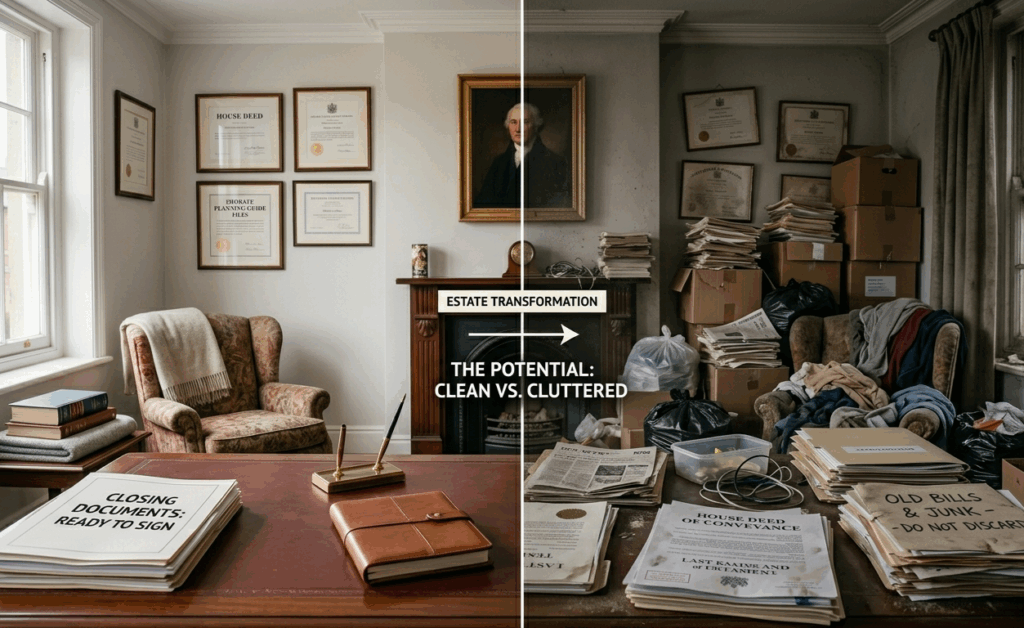
Once probate is settled, the inspection is done, and you understand the tax picture, you hit the decision everything else has been building toward: do you clean the house out fully and list it the traditional way, or sell it as-is to a cash buyer?
For many Delaware heirs, especially those managing this from out of state, an as-is sale is the practical answer, and the reasons are concrete rather than sentimental. You skip the repeated flights back to Delaware to babysit a cleanout.
You avoid paying out of pocket for junk removal, remediation, and contractor work on a house you never lived in. You close fast, often somewhere in the range of a week to three weeks, which lets you settle the estate and stop carrying a property that’s bleeding taxes and insurance every month.
There’s no financing contingency to fall through, no appraisal to flag the condition, and no agent commission taking five or six percent off the top.
The honest counterpoint is that a traditional listing can pull a higher gross price — providing you have the time, the capital, and someone local who can run the cleanup and repairs.
What surprises heirs is how close the two paths often land once you subtract everything a listing really costs: the cleanout, the repairs, the months of holding costs, the commissions, and the very real risk that a financed buyer walks away when the inspection comes back rough.
The buyer you choose matters as much as the price
Not every cash buyer is equipped for this. Selling an inherited hoarder home isn’t a routine transaction, and you want someone who understands probate situations.
Ask how many estate and inherited sales they’ve handled, and whether they’ve dealt with, for instance, open code violations or contents left behind. The right buyer treats the whole thing as a problem they’ve solved many times, because they have.
Delaware Home Buyers has helped dozens of heirs and personal representatives sell difficult estate properties across Wilmington, Newark, Dover, and all of New Castle County. We buy as-is, including contents and violations, work alongside your estate attorney, and close on a timeline that fits the estate. Call (302) 600 2014 for a no-obligation conversation about where things stand.
Closing the chapter without losing your mind
Selling an inherited hoarder house in Delaware doesn’t have to take over your life.
Confirm your authority to sell, get the inspection done before the cleanout, understand what Delaware will and won’t tax, and then choose your sale strategy based on real numbers instead of guilt or family pressure.
Handle those pieces in that order, and you can settle the estate, honor the person who left it to you, and move forward without the months of dread most heirs assume come with the territory.
When you’re ready to talk through your options, Delaware Home Buyers is here to help you find the smartest way off the property.