

Most people who own a hoarder house don’t find out about a code violation until they’re already trying to sell. A buyer’s lender balks, a title company flags something, or a stack of notices turns up in a drawer nobody had checked. By then, the citation has usually been sitting there for a while, quietly growing daily fines.
If that’s where you are right now, take a breath. A code violation complicates a Delaware sale, but it doesn’t make a deal impossible. Deals end when you don’t know what cards you’re dealt with until it’s too late.
Why clutter turns into code problems
A hoarder house rarely trips one violation at a time. The accumulation itself creates conditions that break the rules, often without the owner ever realizing an inspector came by.
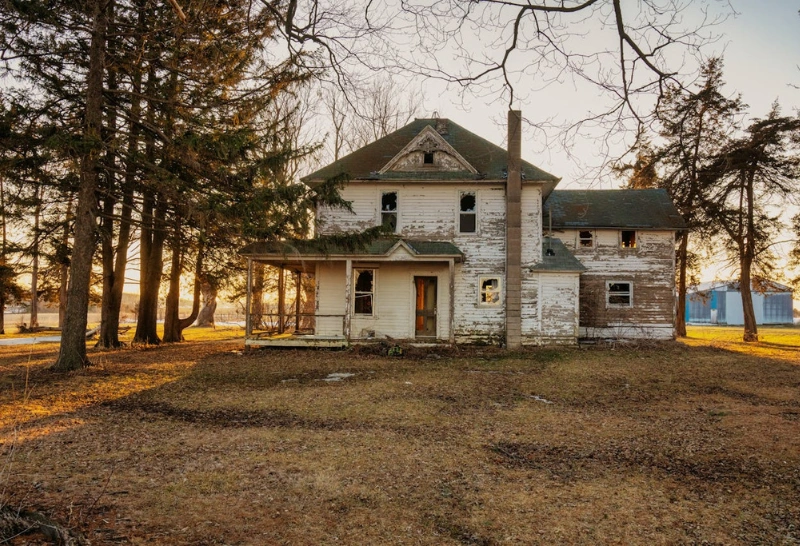
In Wilmington and across New Castle County, city inspectors can enter and cite a property once a complaint is filed or when the exterior alone looks like a hazard. Overgrown yards, junk piling up along the side of the house, a neighbor who’s had enough and picks up the phone.
That’s usually how it starts.
Once an inspector gets inside, the citations rarely come alone. Delaware municipalities enforce the International Property Maintenance Code, or IPMC, alongside local ordinances, and a house packed to the ceiling often violates several provisions at once.
The violations that show up most
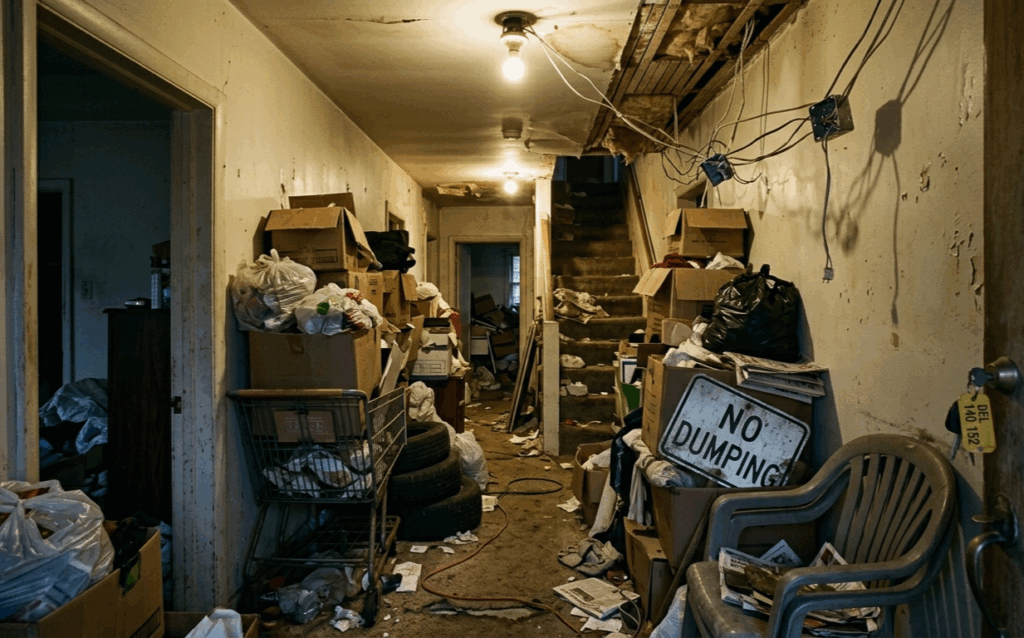
Fire safety is where inspectors take it most seriously, and for good reason. Blocked exits and hallways, combustible material stacked against walls, smoke detectors that stopped working years ago, fire equipment buried under boxes.
In Wilmington, these citations can escalate fast, from fines to an order to vacate to, in the worst cases, condemnation. If any part of a house is going to force a municipality’s hand quickly, it’s usually this.
Then come the structural and habitability issues. Years of weight bow floor joists. Water gets in through a roof nobody could reach to fix. Add broken windows, missing stair handrails, and general deterioration, and you have conditions an inspector will flag as unsafe for occupancy.
Sanitation and health violations tend to be the ugliest. Pest infestations, animal waste, mold spreading from water damage, hazardous materials stored where they shouldn’t be. The catch is that these often require licensed remediation companies rather than a standard cleaning crew, and that distinction pushes the cost up sharply.
Finally, there’s the exterior stuff, which is often the first citation issued because it’s the most visible from the street. Delaware municipalities have ordinances targeting accumulated junk, debris, and dead vehicles on a property. It can feel minor next to a fire hazard.
However, an unresolved exterior violation still flags the property in public records, and that’s enough to spook a cautious buyer or their lender.
How a violation changes who can buy your house
Here’s the part that reshapes the whole sale. An open code violation doesn’t legally stop you from selling in Delaware, but it collides hard with how most buyers pay.
A typical buyer needs a mortgage, and a lender won’t fund a home that fails basic habitability standards. FHA, VA, and conventional appraisals all flag active violations, and when that happens, the deal usually stalls or dies. The lender may demand the issues be fixed before closing, which puts the repair burden squarely back on you.
That reality is why hoarder homes attract a much smaller pool of traditional buyers and why cash buyers and investors so often become the realistic path. It’s not that nobody wants the house. The people who can close on it are a narrower, specialized group.
The paths that actually exist
If the violations are limited in scope and cost, clearing them before you list is worth considering. It reopens the full buyer market, which usually means a higher sale price. You’ll hire licensed contractors, schedule re-inspections, and get written sign-off from the municipality.
For something minor, that’s a few weeks. For structural or health code work, it can stretch into months, and you’ll carry taxes, insurance, and utilities the entire time. Do the math on whether the higher price clears those holding costs.
You can also list the house with the violations disclosed and price it to reflect what it will cost to fix them. Delaware law requires you to disclose known material defects, and active violations qualify, so honesty here isn’t optional anyway.
This route tends to attract investors and fix-and-flip buyers, but expect fewer offers and a longer time on the market while you wait for the right one.
For homes with serious violations, selling as-is to a cash buyer is frequently the most direct way out. A cash buyer purchases in any condition, open violations and full contents included, and takes on the remediation after the sale.
You don’t fix anything, and you don’t wait on a re-inspection.
When the house has been condemned
Condemnation raises the stakes but doesn’t erase your options. A condemnation order formally declares the home unfit for occupancy, and in Delaware that adds legal complexity rather than killing the sale outright.
If your New Castle County property has been condemned, you’ll need to work with the issuing municipality to understand exactly what it takes to lift the order.
Condemned homes can still be sold to cash buyers who handle distressed properties, as long as the title is clear and the transaction is documented properly.
Don’t rent, occupy, or list a condemned house without first talking to a Delaware real estate attorney, because violating that order can expose you to personal liability.
Where to go from here
Code violations can feel like a wall, but they’re solvable once you know which ones you have and how each affects a sale. Whether you clear them, disclose and price around them, or sell as-is depends on the severity, your timeline, and how much cash and patience you’re willing to put in.
Delaware Home Buyers works with owners in exactly this spot throughout Wilmington, Newark, Middletown, and all of New Castle County. We buy hoarder homes with open violations, handle the resolution after closing, and won’t ask you to fix or clean a thing first.
Call (302) 600 2014 for a straight answer and a no-obligation cash offer, and we’ll help you figure out the smartest way off the property.